The MPU in Passive THC Consumption: What You Need to Know
The detectability of THC in urine can vary. With active consumption, THC can be detected up to 30 days after the last consumption, while with passive smoking the detection time is usually shorter, but can still be a few days. The specific values that can be achieved depend on various factors, such as the intensity of passive smoking and the individual metabolic rate. A THC-COOH value, which is measured as a metabolite of THC in urine, plays a crucial role here.
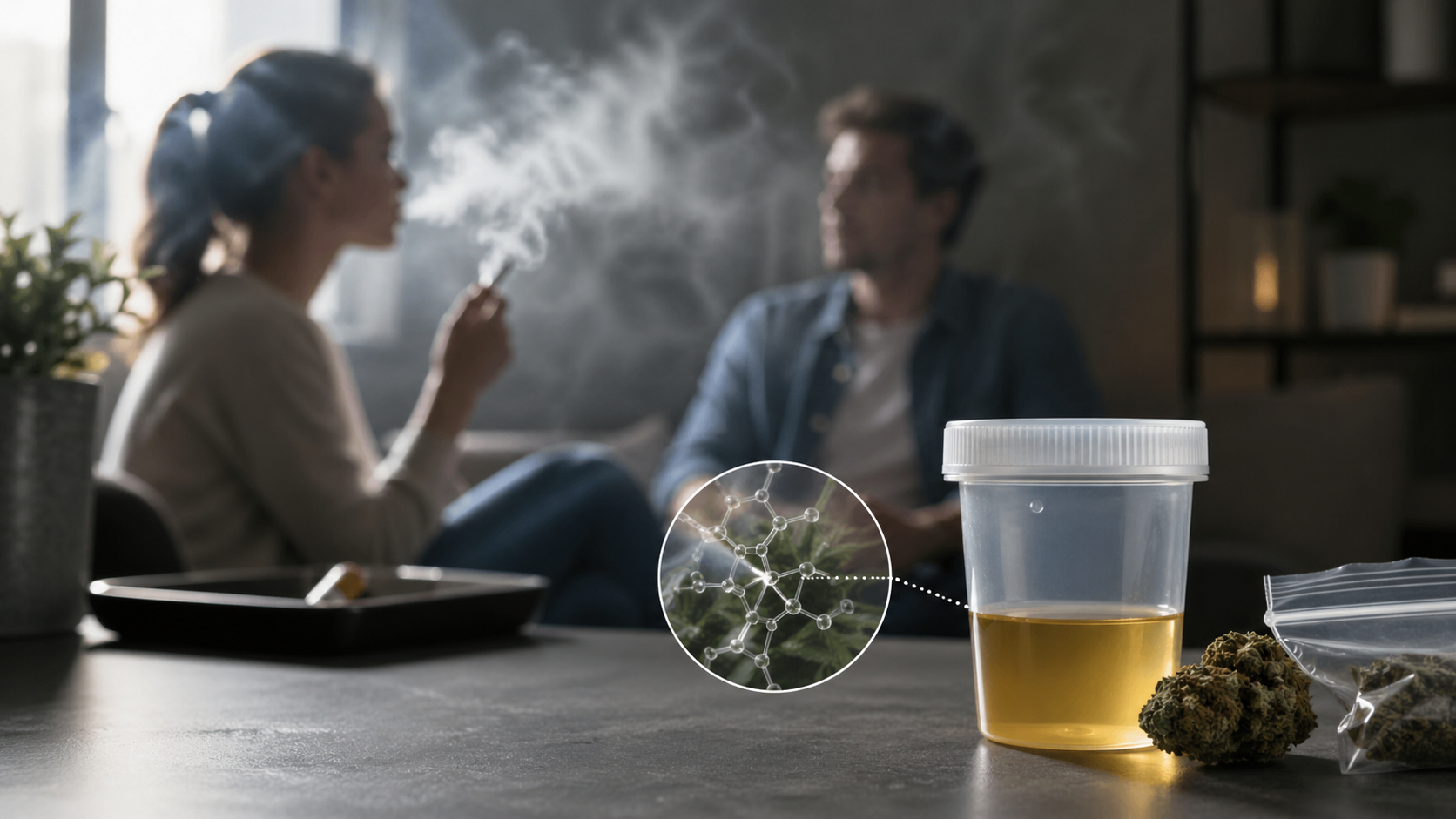
Duration of THC detectability in urine during passive smoking
The detectability of THC in urine after passive smoking can vary depending on the intensity of exposure and individual factors. Studies show that THC can be detectable in urine for up to 48 hours after intense passive smoking. This depends largely on how well ventilated the room was and how close the person was to the smoke sources. The concentration of THC-COOH, a major metabolite of THC, can also provide information about the level of exposure.
Risk of passively getting high in enclosed spaces
Secondhand cannabis smoking in closed rooms represents a significant risk. The low air circulation indoors causes the THC concentration in the air to increase and therefore a higher amount of the active ingredient to be inhaled.

Studies show that people who spend time in such rooms can not only have THC detected in their urine, but can also experience psychotropic effects such as dizziness or mild intoxication. This is particularly problematic because even short stays in poorly ventilated rooms with intensive cannabis use are enough to accumulate detectable amounts of THC in the body.
Dangers of getting passively high while driving
The risk of impaired driving due to passive cannabis smoke is real. Even if you haven’t actively consumed it, small amounts of THC in your blood or urine can be enough to exceed legal limits. This can lead to a positive drug test and ultimately the ordering of an MPU.
While active consumption is often easy to detect and quantify, proving passive consumption is more difficult. However, there are cases where drivers have faced legal liability due to passive consumption, highlighting the importance of awareness and caution when dealing with cannabis smoke.
Effects of passive cannabis use on children
Children are particularly vulnerable to the negative effects of secondhand smoke because their bodies are smaller and their metabolisms work differently. Passive cannabis use can lead to a range of health problems in children, including respiratory problems, cognitive impairment and behavioral problems.
Additionally, studies show that THC can be detected in children’s urine if they are regularly exposed to cannabis smoke. Parents should therefore definitely avoid smoking in the presence of children and ensure well-ventilated environments.
THC-COOH value in urine after daily cannabis consumption
THC-COOH levels in urine are a key indicator of cannabis use. With daily consumption, this value can increase significantly and remain detectable for longer periods of time. THC-COOH is a metabolite of THC and is broken down more slowly in the body than THC itself.
With regular consumption, accumulation can occur, which can extend detectability in urine for several weeks. These values are particularly important in the context of the MPU, as they allow conclusions to be drawn about consumption history and consumption patterns.
Possibility of babies getting high from secondhand smoke
The idea that babies can get high from secondhand smoke is disturbing, but not unfounded. Babies are particularly sensitive to environmental influences, and their small bodies can absorb THC more quickly and break it down more slowly. Studies have shown that babies who are regularly exposed to secondhand smoke may have THC in their urine.
This can lead to health problems, including developmental delays and respiratory problems. Parents and carers should therefore strictly avoid any contact of babies with cannabis smoke.
Increase in THC levels without active consumption
An increase in THC levels in the body without active consumption can be caused by various factors. Passive smoking is one of the main causes, especially in poorly ventilated rooms. Contact with contaminated surfaces or touching cannabis products can also result in minimal THC absorption.
There are also reports that THC levels can increase when consuming certain foods or supplements that contain hemp extracts. These factors are particularly relevant for individuals undergoing MPU, as even low levels of THC not caused by active consumption can have consequences.
Can kissing make a drug test positive?
The possibility that a Drug test A positive effect from kissing is small, but cannot be completely ruled out. If a person who has recently used cannabis kisses another person, small amounts of THC could be transferred. Studies have shown that these amounts are usually not enough to trigger a positive drug test.
However, this depends on various factors such as the amount of THC consumed, the intensity of the contact and the individual drug test sensitivity. In special cases, such as intensive and repeated contact, a positive test result can theoretically occur.
THC detection levels FAQ
How many nanograms after passive smoking?
After intensive passive smoking, THC levels in urine can be up to 20 ng/ml. This depends heavily on the duration and intensity of the exposure as well as the individual metabolic factors. However, the exact amount varies considerably and in most cases is below the detection limits of standard drug tests.
How many nanograms after joint the next day?
After consuming a joint the day before, THC levels in blood and urine can vary greatly. In blood, THC levels are typically between 1 and 10 ng/ml, while THC-COOH levels in urine can range between 50 and 200 ng/ml. These levels depend on factors such as the amount of THC consumed, individual metabolism and frequency of consumption.