Legal drugs: underestimated danger
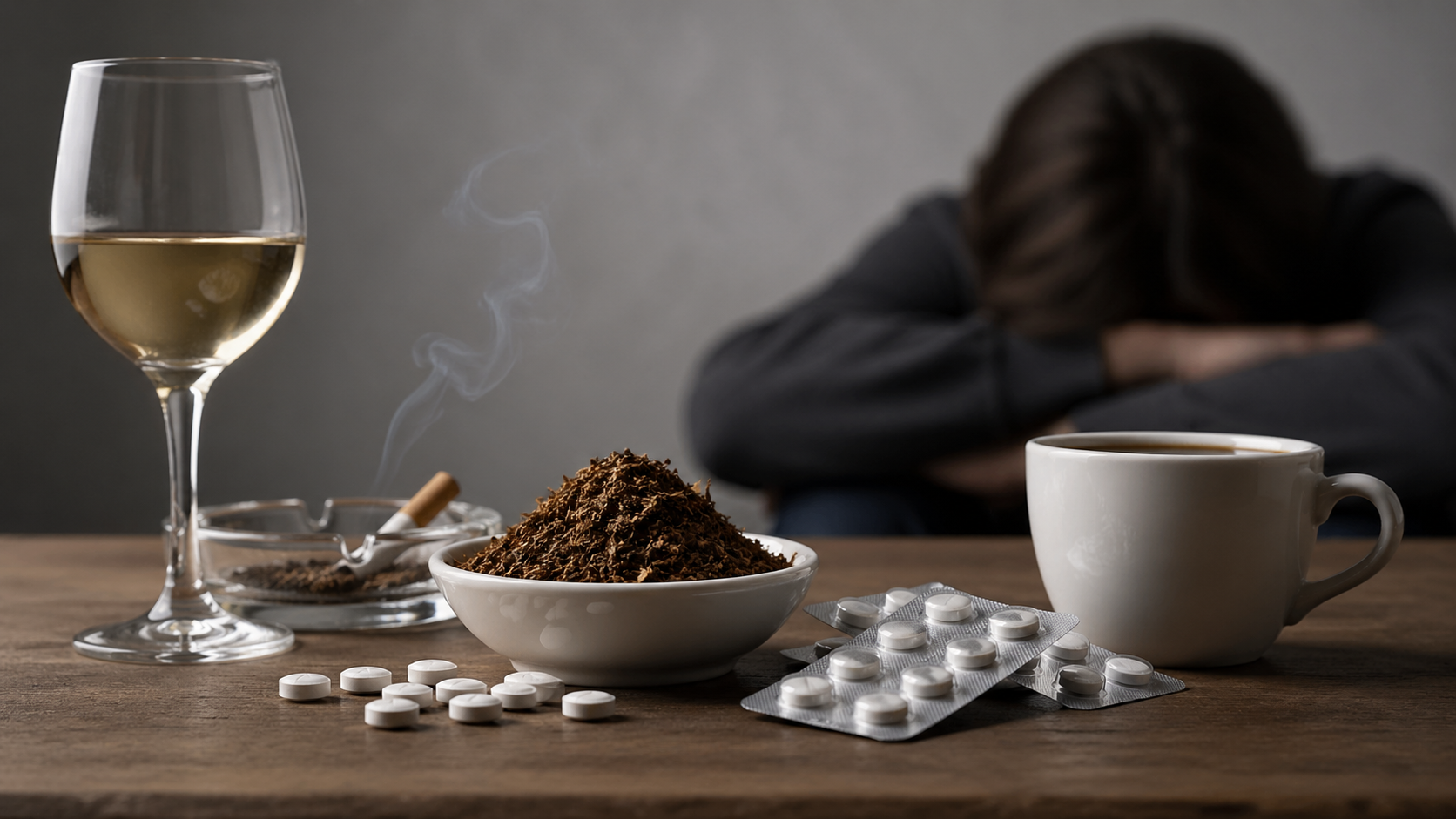
Legal drugs seem harmless because they are freely available. But that is exactly the fallacy. Substances such as alcohol, nicotine, cannabis, caffeine as well as medications such as benzodiazepines, Z-substances and opioids are part of everyday life – and yet still pose significant risks. Every year in Germany over 70,000 people die as a result of alcohol consumption. The combination of social acceptance and underestimated danger makes legal drugs particularly problematic.
The most important thing in brief
- Legal drugs are freely available, but are by no means harmless
- Alcohol causes over 70,000 deaths in Germany every year
- Typical consequences include liver cirrhosis, cancer, depression and anxiety
- Many substances have a high to medium addiction potential
- Treatment involves qualified withdrawal with detoxification and withdrawal
Are legal drugs dangerous?
Yes, legal drugs such as alcohol, nicotine or medications can cause serious physical and psychological damage and have a high potential for addiction. Despite their legality, they are one of the biggest health threats.
Definition: What are legal drugs?
From a legal perspective, legal drugs are substances whose possession and consumption are not prohibited by the Narcotics Act (BtMG). But be careful: Legality is not the same as fitness to drive. * Everyday drugs: Alcohol, nicotine and caffeine.
-
Medication: Benzodiazepines or strong painkillers (opioids) are legal if prescribed by a doctor, but can still lead to your driving license being revoked.
-
Gray area substances: Substances such as laughing gas or certain “legal highs” that do not (yet) fall under the NpSG. What is crucial for the MPU is: Any substance that… psychomotor performance impaired, is legally treated like a drug as soon as you take part in traffic.
Legal drugs in Germany at a glance
The main legal drugs include alcohol, nicotine, cannabis and caffeine. These substances are strongly anchored in society. In addition, medications play a major role. These include benzodiazepines, Z-substances as well as opioids and opiates.
Some of these medications are subject to the Narcotics Act. They are only available with a special prescription. Certain plants are also considered psychoactive drugs. Examples include Datura, Blue Lotus or Hawaiian Woodrose. There are also so-called legal highs. These synthetic substances exploit loopholes in the law. They may be legal in the short term, even though they are dangerous.
Overview of legal drugs
| category | Examples | Special feature |
|---|---|---|
| Luxury foods | Alcohol, caffeine | socially accepted |
| Tobacco products | nicotine | high addictive potential |
| Medication | Benzodiazepines, Z-substances | often underestimated |
| Painkillers | Opioids, opiates | highly addictive |
| Plant | Datura, Blue Lotus | rare but risky |
Risks and health consequences
Legal drugs cause massive damage to health. Alcohol often leads to liver cirrhosis and pancreatitis. In addition, the risk of cancer increases significantly. Nicotine damages blood vessels and increases the risk of heart attack and lung cancer. Drugs such as benzodiazepines have a strong psychological impact. They can increase depression and anxiety.
How legal drugs destroy your ability to drive
In addition to organ damage such as liver cirrhosis, the neuropsychological consequences are particularly fatal for drivers:
-
Response delay: Especially with alcohol and benzodiazepines, the time between recognizing danger and braking maneuvers is massively extended.
-
Attention deficits: Medications and cannabis can limit the ability to divide attention (checking mirrors, observing the road).
-
Increased willingness to take risks: Many legal substances have a disinhibiting effect, which leads to dangerous overconfidence. In MPU performance diagnostics, exactly these deficits are checked using the PC test (e.g. Vienna test).
Dependency potential: How quickly does addiction develop?
The danger of legal drugs lies in the gradual development of tolerance. When the body gets used to regular amounts of alcohol or painkillers, the consumer hardly notices the intoxicating effect – the Performance behind the wheel is still massively limited.
In the MPU, experts consider a high resistance to poisoning (e.g. driving with a high blood alcohol level without symptoms of failure) as a clear sign of an advanced problem. A stable change in behavior can only be proven through long-term abstinence (6 to 12 months).
Why are legal drugs allowed?
Legalization is often based on cultural factors. Alcohol is deeply rooted in society. The same applies to coffee or cigarettes. These habits are rarely questioned. Economic interests also play a role.
The state benefits from tax revenue. At the same time, there is regulation via age limits and laws. Nevertheless, a contradiction remains. Because the damage to health is enormous. That’s why education is the focus of prevention. This is the only way to better assess risks.
Dangerousness: Legal does not mean safe
A crucial mistake is to equate legality and security. In fact, legal drugs cause the most deaths. Alcohol is the clearest example. More than 70,000 deaths per year show the dimension. Illegal drugs cause significantly fewer victims.
Nevertheless, they are more feared. Nicotine also leads to serious illnesses. Medications pose additional risks. Especially if used incorrectly or consumed over a long period of time. The biggest risk factor is availability. The more accessible a substance is, the more frequently it is consumed.
Unusual angle:
An often overlooked factor is social normalization. Legal drugs are not only accepted, but actively integrated into everyday situations. The beer after work, the coffee in the morning or the cigarette during the break are ritualized. This creates no feeling of danger. It is precisely this normalization that lowers the inhibition threshold for regular consumption. And in the long term, the risk of addiction increases more than with illegal drugs that are deliberately avoided.
New psychoactive substances (NPS) and the NpSG
The term “legal drugs” is deceptive because the New Psychoactive Substances Act (NpSG) bans entire groups of substances in order to counteract the rapid emergence of new designer drugs. For the driving license authority, it does not matter whether a substance was legally acquired if it impairs your ability to drive.
Anyone who has NPS in their blood runs the immediate risk of MPU, as the consumption of such substances is often seen as a lack of ability to differentiate between intoxication and traffic. The legal gray area therefore in no way protects against the loss of a driver’s license.
Drug abuse as an underestimated danger
In addition to alcohol and nicotine, prescription drugs such as benzodiazepines or tilidine are among the most frequently abused legal substances in Germany. In the MPU context, it is crucial whether there is a doctor’s prescription and whether the dosage corresponds to medical requirements.
Abusive consumption is viewed by experts as critically as the consumption of illegal drugs, as it can indicate a deeper addiction problem. The combination of medication with alcohol in particular leads to unpredictable road traffic problems.
Forensic detectability of legal substances
Modern drug tests in MPU preparation are now able to detect much more than just the classic illegal substances. Many legal highs, research chemicals and specific medications can also be proven for months using forensically proven hair analyzes or urine screenings.
A successful abstinence program therefore requires complete documentation of freedom from consumption by a recognized laboratory provider. When it comes to legal drugs, experts check particularly carefully whether alternative use has taken place in order to replace the actually critical substance.
Treatment: The way out of addiction
Addiction to legal drugs should always be taken seriously. Treatment begins with qualified withdrawal. This includes two central steps. Detoxification takes place first. The body is freed from the substance. This is followed by weaning. Psychological causes are treated here. Going cold turkey is particularly dangerous with alcohol.
Seizures or delirium may occur. Therefore, treatment should be carried out as an inpatient. Specialist clinics offer medical care around the clock. Additionally, therapy programs help with stabilization. The goal is a permanently addiction-free life.
Conclusion
Legal drugs are an underestimated risk. They are readily available and socially accepted. That’s exactly what makes them so dangerous. Alcohol, nicotine and medications cause serious illness and high death rates. At the same time, they have considerable addictive potential. Anyone who recognizes warning signs should act early. Professional rehab can save lives. Education and awareness are the first step.
Sources:
- ESA study: 9.8% cannabis consumption in 2024 source
- Drug Affinity Study 2023: Youth Trends Legal/Illegal Drugs source
- Weed Care: Legal delivery reduces risks source
FAQ
Are legal drugs dangerous in the MPU?
Yes, because fitness to drive depends on the effects of a substance and not just on its legal status. Experts often interpret the consumption of intoxicating legal substances as an indication of a lack of character suitability for driving motor vehicles.
Do legal highs automatically lead to MPU withdrawal?
As soon as the consumption of substances according to the NpSG impairs the ability to drive, the authority usually requires an MPU. Since these substances often have unpredictable effects, the risk to road traffic is classified as extremely high.
How are legal drugs detected in the MPU?
Proof is provided through forensic urine or hair analyzes in specialized laboratories that meet the standards of the assessment bodies. Modern designer drugs can also be reliably identified using advanced screening procedures.
Is alcohol considered a legal drug at the MPU?
Alcohol is the most widely used legal drug and leads to an MPU order if there are corresponding alcohol levels or indications of addiction. Due to its high risk potential for traffic, it is often assessed more strictly than some illegal substances.
Can taking painkillers affect MPU?
If strong painkillers such as opioids limit the ability to concentrate, you are no longer fit to drive. Without a medical opinion and strict adherence to the dosage, this is considered drug abuse.
Are nicotine and caffeine relevant for MPU?
As a rule, nicotine and caffeine have no direct influence on the existence of an MPU, as they do not massively impair the ability to drive. However, excessive consumption can be discussed in psychological discussions as an indication of a general addiction structure.
What happens if I take legal substitute drugs while abstinent?
Experts consider switching to other intoxicating substances to be a clear sign that behavior has not changed. This almost always leads to a negative MPU result because the stability of abstinence is questioned.
How do experts assess the consumption of laughing gas?
Although nitrous oxide is legally available, driving under the influence can lead to massive failures and thus the revocation of your driving license. In the MPU, consumption is classified as irresponsible behavior towards road safety.
Is CBD oil a problem for MPU?
CBD products may contain small amounts of THC, which can accumulate in the body with regular consumption and lead to positive drug tests. It is therefore advisable to completely avoid such products during the preparation phase in order not to jeopardize the abstinence certificates.
Where can I find reliable information about the dangers of legal drugs?
Authoritative sources such as the BZgA (drugcom.de) or scientific rankings offer detailed insights into the potential for harm. This information helps you to realistically assess your own consumer history in a psychological interview.